Introduction
Imagine turning thousands of customer comments, tweets, and reviews into clear actions that boost loyalty and revenue. In 2026, with AI reshaping customer experiences, sentiment analysis is your secret weapon.
This technique uses artificial intelligence to detect emotions—positive, negative, neutral, or mixed—in text data from emails, social posts, chats, and surveys.
Why does it matter now? Businesses ignoring customer feelings lose 20-30% more customers annually, per Gartner reports.
This extended guide dives deep into every aspect, with practical steps, solutions from Hubino (an AI-powered customer experience platform), and strategies for omni-channel success.
What is Sentiment Analysis?
Sentiment analysis, also called opinion mining, is an AI-driven process that automatically classifies text as positive, negative, neutral, or even compound (mixed feelings).
It goes beyond keywords by understanding context, slang, emojis, and cultural nuances.
Simply put, it uses Artificial Intelligence (AI) and Natural Language Processing (NLP) to analyze text and determine the emotional tone behind it.
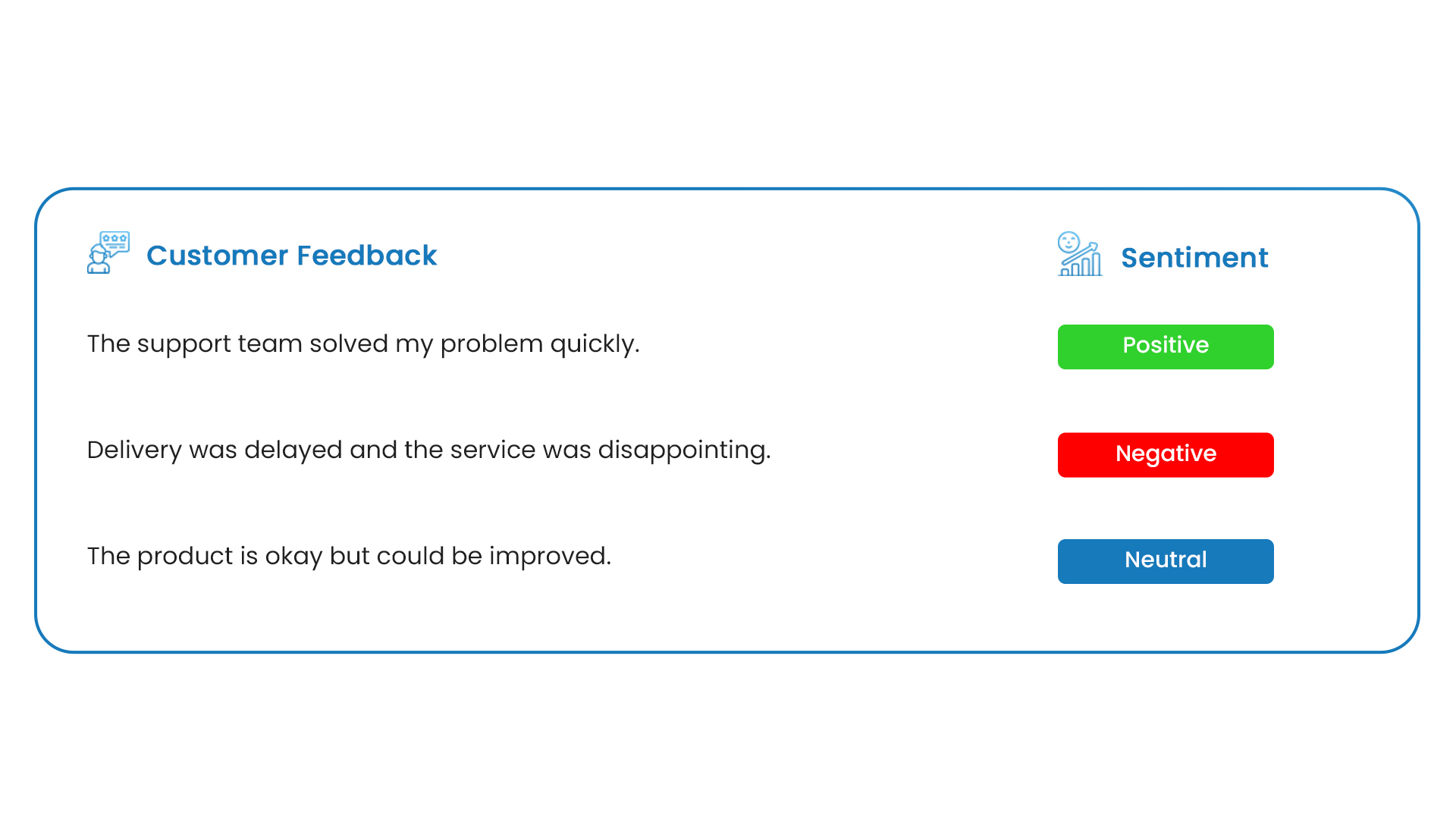
It helps businesses understand whether a piece of customer feedback expresses:
- Positive sentiment
- Negative sentiment
- Neutral sentiment
For example:
Sentiment analysis can analyze data from: Customer review, Social media posts, Emails, Support tickets, Surveys and feedback forms, and Chat conversations.
Instead of reading each message manually, companies can quickly understand overall customer perception.
Why is Sentiment Analysis Essential?
Understanding customer emotions is critical for businesses that want to improve their services and build stronger relationships. Customers constantly share opinions through reviews, social media, surveys, and support conversations. However, manually analyzing this feedback is difficult because of the large volume of data. Sentiment analysis helps businesses automatically analyze this feedback and identify whether customer opinions are positive, negative, or neutral.
1. Understand Customer Opinions at Scale
Businesses receive thousands of customer messages every day across multiple channels. Sentiment analysis allows companies to quickly analyze large volumes of feedback and identify common trends. This is important because around 98% of consumers read online reviews before making a purchase, making customer opinions a key factor in business success.
2. Identify Customer Issues Faster
Negative feedback often highlights problems such as poor customer service, product defects, or delivery delays. Sentiment analysis helps businesses detect these issues early and take action quickly. Studies show that about 95% of customers share bad experiences with others, which means unresolved issues can damage a brand’s reputation.
3. Improve Customer Experience
By analyzing customer feedback, businesses can understand what customers like and dislike. These insights help companies improve products, services, and support experiences, leading to higher customer satisfaction and loyalty.
4. Monitor Brand Reputation
Customers frequently discuss brands on social media and review platforms. Sentiment analysis helps businesses track how people feel about their brand in real time. Since over 90% of consumers check reviews before choosing a business, monitoring sentiment is essential for maintaining a positive reputation.
5. Support Better Decision-Making
Customer sentiment provides valuable insights that help leaders make better decisions. Instead of relying on assumptions, businesses can use real customer feedback to improve products, refine marketing strategies, and enhance overall customer experience.
Types of Sentiment Analysis
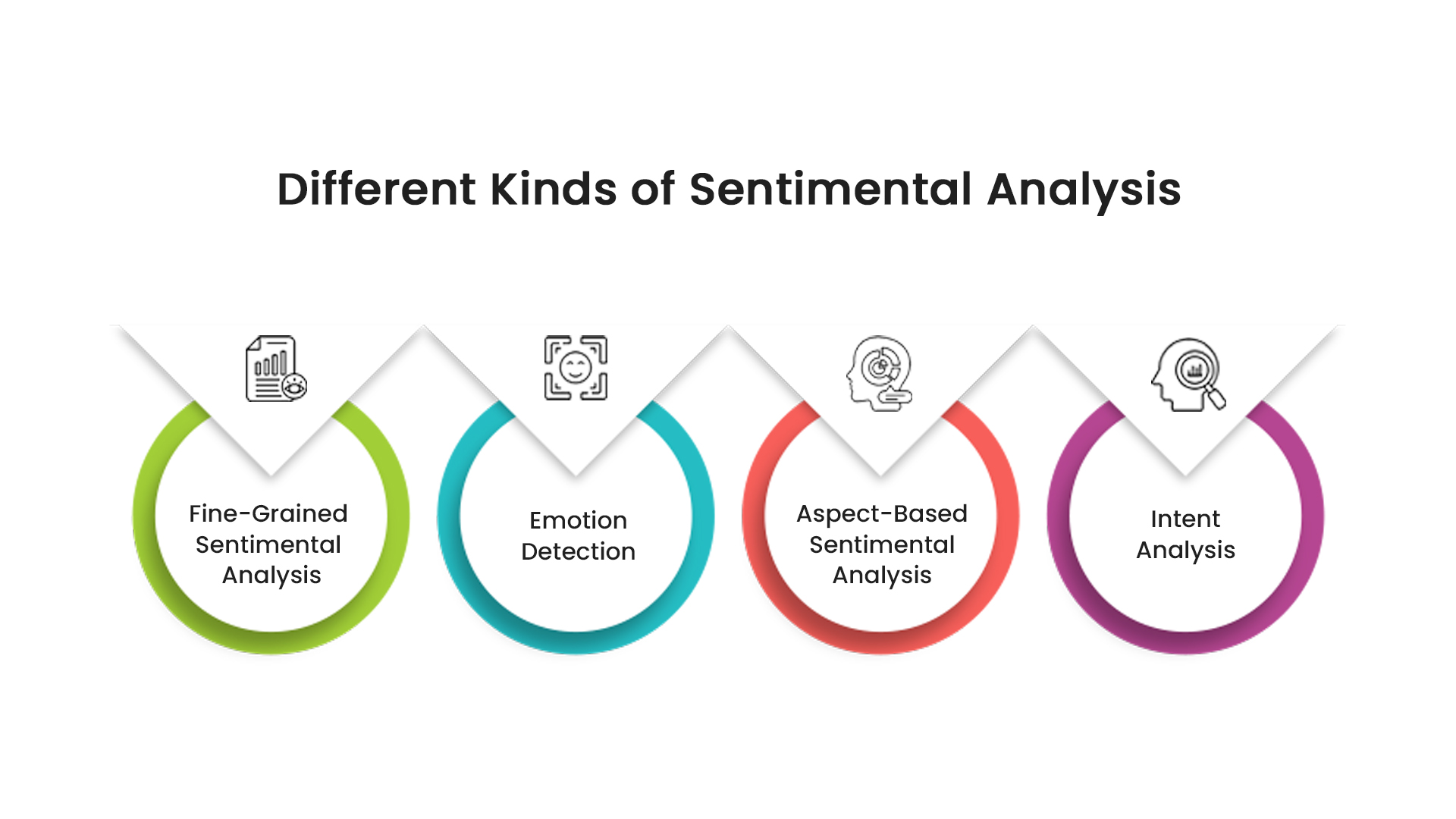
Sentiment analysis can be categorized into different types based on how deeply customer emotions are analyzed.
1. Fine-Grained Sentiment Analysis
This method classifies sentiment into detailed categories such as:
- Very positive
- Positive
- Neutral
- Negative
- Very negative
It is commonly used for analyzing product reviews.
2. Emotion Detection
Instead of just positive or negative sentiment, emotion detection identifies specific emotions like:
- Happiness
- Anger
- Frustration
- Satisfaction
- Excitement
This provides deeper insights into how customers truly feel.
3. Aspect-Based Sentiment Analysis
This type focuses on specific parts of a product or service. For instance, Customer Review: “The camera quality is great, but the battery life is poor.”
Analysis result:
- Camera → Positive sentiment
- Battery → Negative sentiment
This helps businesses identify which features customers like or dislike.
4. Intent Analysis
Intent analysis tries to understand the purpose behind a message.
For example:
- Complaint
- Purchase interest
- Product inquiry
- Support request
Understanding intent helps companies respond appropriately.
Benefits of Customer Sentiment Analysis
Implementing sentiment analysis can provide several practical benefits for businesses by transforming large volumes of customer feedback into meaningful insights.
1. Better Customer Experience
Sentiment analysis helps businesses detect customer frustrations early and respond before issues escalate. For example, if multiple customers express negative sentiment about delayed deliveries or slow support responses, companies can address these issues immediately. Studies show that 86% of customers are willing to pay more for a better customer experience, highlighting how important it is to understand and improve customer satisfaction.
2. Product Improvement
Customer reviews often reveal recurring complaints, feature requests, or usability issues. Sentiment analysis helps product teams identify these patterns quickly. For instance, a software company may notice that users frequently express frustration about a specific feature, allowing the product team to prioritize improvements. According to research, over 90% of consumers read product reviews before making a purchase, making feedback an essential source for product development.
3. Smarter Customer Support
Customer support teams can use sentiment analysis to identify urgent or emotionally charged messages. If a customer expresses strong negative sentiment in a support ticket, the system can automatically flag it for priority response. This allows support teams to resolve critical issues faster and prevent customer churn.
4. Stronger Marketing Strategies
Marketing teams can analyze how audiences react to campaigns, product launches, or advertisements. For example, if a campaign receives mostly positive sentiment on social media, marketers know the messaging is resonating. If negative sentiment increases, they can adjust their communication strategy. Research shows that 72% of customers expect brands to understand their needs and expectations, making sentiment insights valuable for marketing decisions.
5. Competitive Insights
Sentiment analysis can also be applied to competitor reviews and online discussions. Businesses can analyze what customers like or dislike about competing products and identify gaps in the market. For example, if customers frequently complain about a competitor’s pricing or service quality, a company can position its offering as a better alternative.
6. Faster Decision-Making
Instead of manually reading thousands of feedback messages, leaders can access real-time dashboards showing customer sentiment trends. This helps organizations quickly identify emerging problems, track improvements, and make data-driven decisions.
How to Use Sentiment Analysis
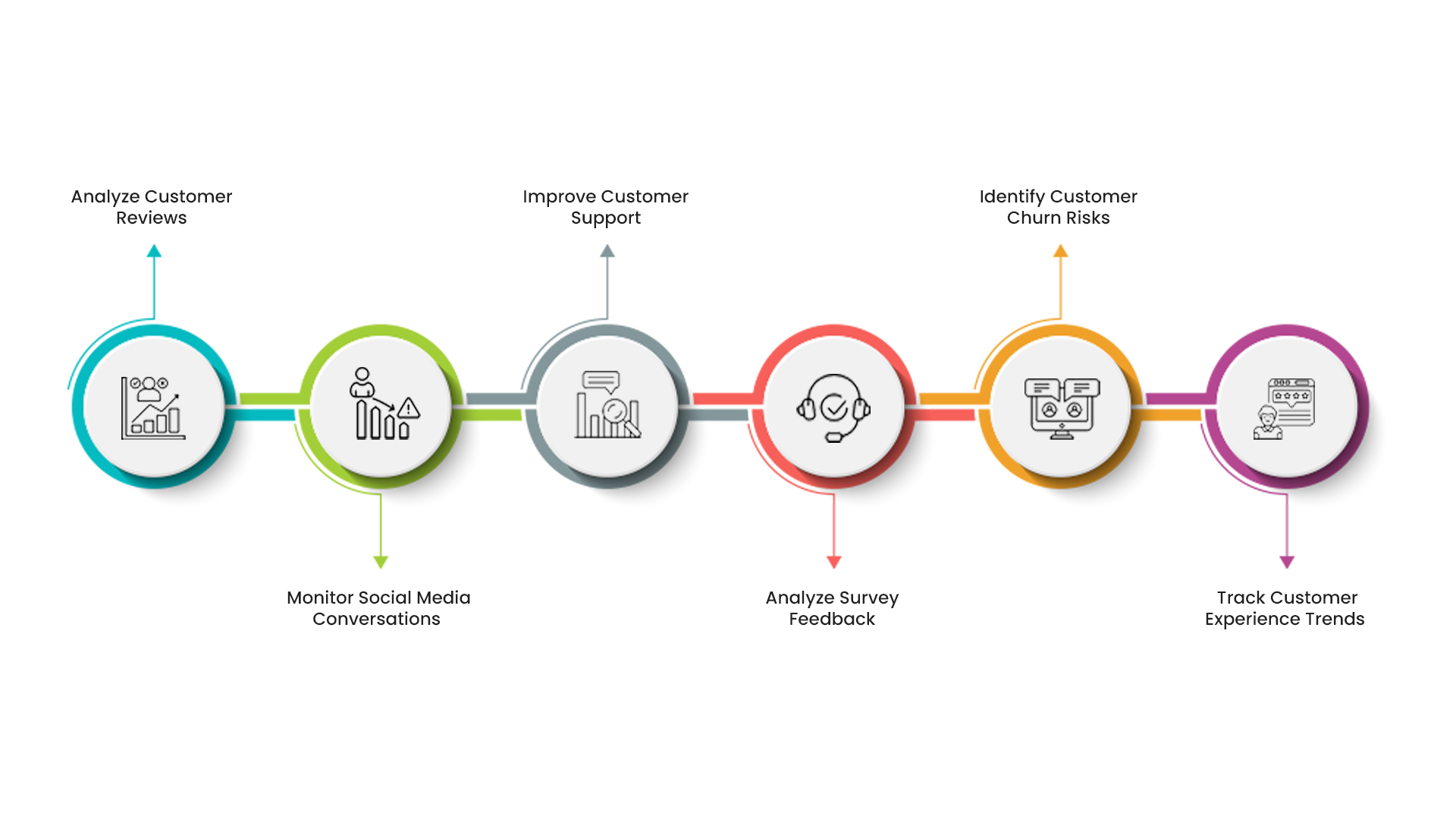
Businesses can apply sentiment analysis in many practical ways to better understand customer opinions and improve their services.
1. Analyze Customer Reviews
Companies can analyze reviews from websites, e-commerce platforms, and app stores to measure overall product satisfaction. For example, an e-commerce company may track sentiment in product reviews to identify quality issues or frequently mentioned complaints.
2. Monitor Social Media Conversations
Social media platforms generate a large amount of customer feedback. Sentiment analysis helps businesses monitor brand mentions and understand how customers talk about their products or services. This allows companies to detect reputation risks or positive trends early.
3. Improve Customer Support
Sentiment analysis can be integrated into support systems to detect frustrated or dissatisfied customers. When negative sentiment is detected in chats or support tickets, teams can prioritize those cases and provide faster assistance.
4. Analyze Survey Feedback
Customer surveys often include open-ended responses that are difficult to analyze manually. Sentiment analysis helps categorize responses into themes such as satisfaction, frustration, or feature requests, making it easier to identify improvement opportunities.
5. Identify Customer Churn Risks
Customers who consistently express negative sentiment in feedback, support conversations, or reviews may be at risk of leaving. By detecting these patterns early, companies can take proactive steps such as offering support, discounts, or improved services to retain customers.
6. Track Customer Experience Trends
Businesses can track sentiment trends over time to measure whether changes in products or services are improving customer satisfaction. For example, after launching a new feature, companies can monitor sentiment to see how customers react.
Future Trends in Sentiment Analysis
Sentiment analysis is evolving rapidly as artificial intelligence technologies continue to advance. Several trends are shaping the future of this technology.
1. Real-Time Sentiment Detection
Future systems will analyze customer emotions instantly as conversations happen. This will allow businesses to respond immediately to customer concerns and improve support experiences.
2. Multimodal Sentiment Analysis
Traditional sentiment analysis focuses mainly on text. Emerging technologies will analyze multiple data sources such as voice tone, facial expressions, and video interactions, providing a more complete understanding of customer emotions.
3. Conversational AI Integration
Sentiment analysis will increasingly be integrated into chatbots and virtual assistants. This will allow AI systems to detect when customers are frustrated or confused and adjust responses accordingly, making interactions more human-like.
4. Predictive Customer Insights
Advanced AI models will not only analyze sentiment but also predict customer behavior. For example, they may identify customers who are likely to churn or predict how customers will respond to new products or campaigns.
5. Deeper Context Understanding
Future sentiment analysis systems will better understand context, sarcasm, and complex language patterns. This will improve the accuracy of sentiment detection and provide deeper insights into customer emotions.
Final Thoughts
Customer sentiment is one of the strongest indicators of business success. Studies show that 86% of customers are willing to pay more for better customer experience, and companies that actively analyze customer feedback can improve retention and satisfaction significantly.
Sentiment analysis allows organizations to convert large volumes of customer conversations—reviews, support tickets, surveys, and social media mentions—into actionable insights. This helps businesses detect issues faster, understand customer expectations, and improve products and services based on real feedback.
Hubino’s AI for CX solutions help organizations do exactly that. By combining sentiment analysis, conversational AI, and analytics, Hubino enables businesses to track customer emotions in real time, identify recurring pain points, and support faster response strategies. This helps CX teams reduce manual effort, improve service quality, and make more data-driven decisions. In a market where customer expectations are rising, Hubino helps businesses convert customer sentiment into stronger engagement, better retention, and improved experience outcomes.
Frequently Asked Questions (FAQs)
1. What is customer sentiment analysis?
Customer sentiment analysis is a technology that uses AI and natural language processing to analyze customer feedback and determine whether the sentiment is positive, negative, or neutral.
2. What data sources can be used for sentiment analysis?
Sentiment analysis can analyze data from reviews, social media posts, emails, surveys, support tickets, chat conversations, and online forums.
3. How accurate is sentiment analysis?
Modern AI-based sentiment analysis tools can achieve high accuracy, but results depend on the quality of data and the model used.
4. Can sentiment analysis be used in customer support?
Yes. Many companies use sentiment analysis to detect frustrated customers and prioritize support responses.
5. What industries use sentiment analysis?
Sentiment analysis is widely used in industries such as:
- E-commerce
- Retail
- Banking and finance
- Healthcare
- Telecommunications
- SaaS and technology companies
